Why Most MVPs Fail Before They Launch

The problem isn't execution speed — it's that founders try to build the product they imagined instead of the product that proves their hypothesis.
After building dozens of MVPs, I've noticed a pattern: most of them fail not because the idea was bad, but because the approach was wrong from day one. The code was fine. The team worked hard. The timeline was reasonable. But the product still didn't go anywhere.
Here's why — and what to do differently.
The trap every founder falls into
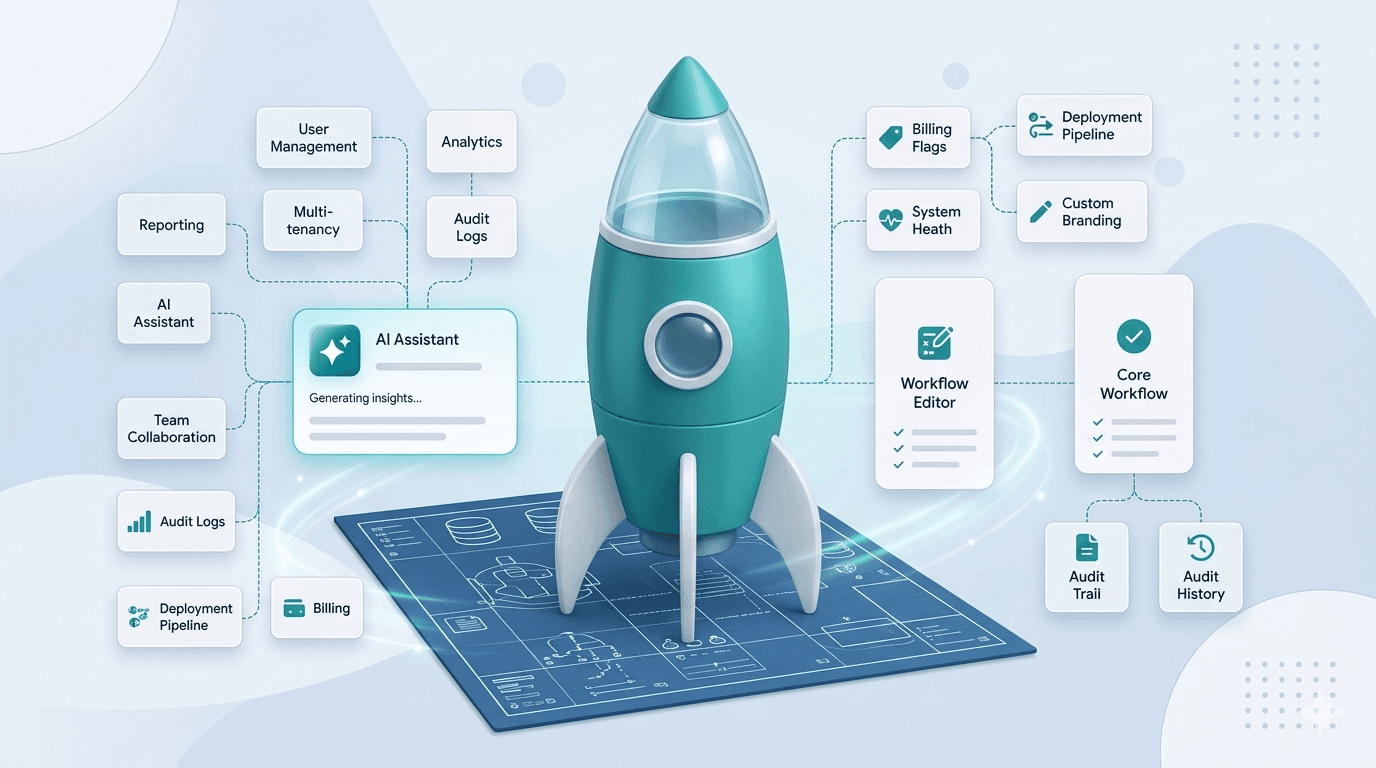
You have an idea. You pitch it. People get excited. You start building. Twelve weeks later, you have a product that does eighteen things — and none of them particularly well. More importantly, none of them have been validated by a single real user.
This is the classic feature factory trap. You build based on what you think users want, not what you need to learn to prove the business model works. The result: months of effort, real money spent, and no signal from the market.
There are four specific mistakes that cause this. Most founders hit at least two of them.
1. Building too many features
A real MVP answers one question: does this core interaction create value for the user? Everything else — payment flows, user management, settings, admin panels — is noise until that question is answered.
If a feature doesn't directly test your core hypothesis, it doesn't belong in the MVP.
At Malvora, we start every project with a scope-cutting session. We list every feature the founder wants, then work through a single filter: what is the one workflow a user must complete for the product to be considered useful? That's your MVP. Everything else is v1.1.
If a feature doesn't directly test your core hypothesis, it doesn't belong in the MVP.
2. No clear validation metric
"We'll know it's working when people use it" is not a success metric — it's a hope.
Before writing a single line of code, you need to define what a successful MVP looks like. Is it 50 users completing a core action? A 30% return rate? A paying customer within 30 days of launch?
Without a clear metric, you can't make a clear decision. You'll spend months debating whether the MVP "worked" instead of acting on what you learned.
3. Wrong technical decisions made too early
Poor architecture choices in week one become expensive problems in month six.
The most common mistakes: choosing a trendy stack the team doesn't know well, over-engineering infrastructure before there's a single user, or building for scale before you've validated demand. These decisions slow down the initial build and make every future iteration harder than it needs to be.
The right approach is to build for learning first, scale second. Use proven technology your team knows deeply. Keep the architecture simple enough to change quickly. You can always refactor once you have users telling you what actually needs to be fast and reliable.
4. Ignoring real user feedback
Founders build for three months, launch quietly, then ask users what they think. That's backwards.
Talk to users before you build — to validate the problem. During the build — to validate the approach. After launch — to validate the solution. Assumptions are expensive. Conversations are free.
The founders who build the best MVPs aren't the ones with the best initial vision. They're the ones willing to find out they were slightly wrong early, when it's cheap to fix.
What this means practically
If your MVP takes more than 4 weeks to build, it's not an MVP — it's a v1.0 dressed up as a minimum product. Cut scope until it hurts, then ship. The feedback you'll get in week five of being live is worth more than any amount of pre-launch polish.
The goal isn't a perfect product. It's the fastest path to a real answer.
Building something and not sure what your MVP actually needs to include? Book a free 30-minute strategy call. We'll map out what to build, what to skip, and what it'll take to get live in 2–4 weeks.
Every insight on this page comes from building real products with real founders. If something here resonates with a challenge you're facing, it's probably worth a 30-minute conversation.
Ready to build?
Build your MVP in 2–4 weeks.
Turn this insight into action. Book a free 30-minute strategy call and leave with a clear scope, architecture plan, and timeline.