
Technical Debt Isn't Bad — Unplanned Technical Debt Is
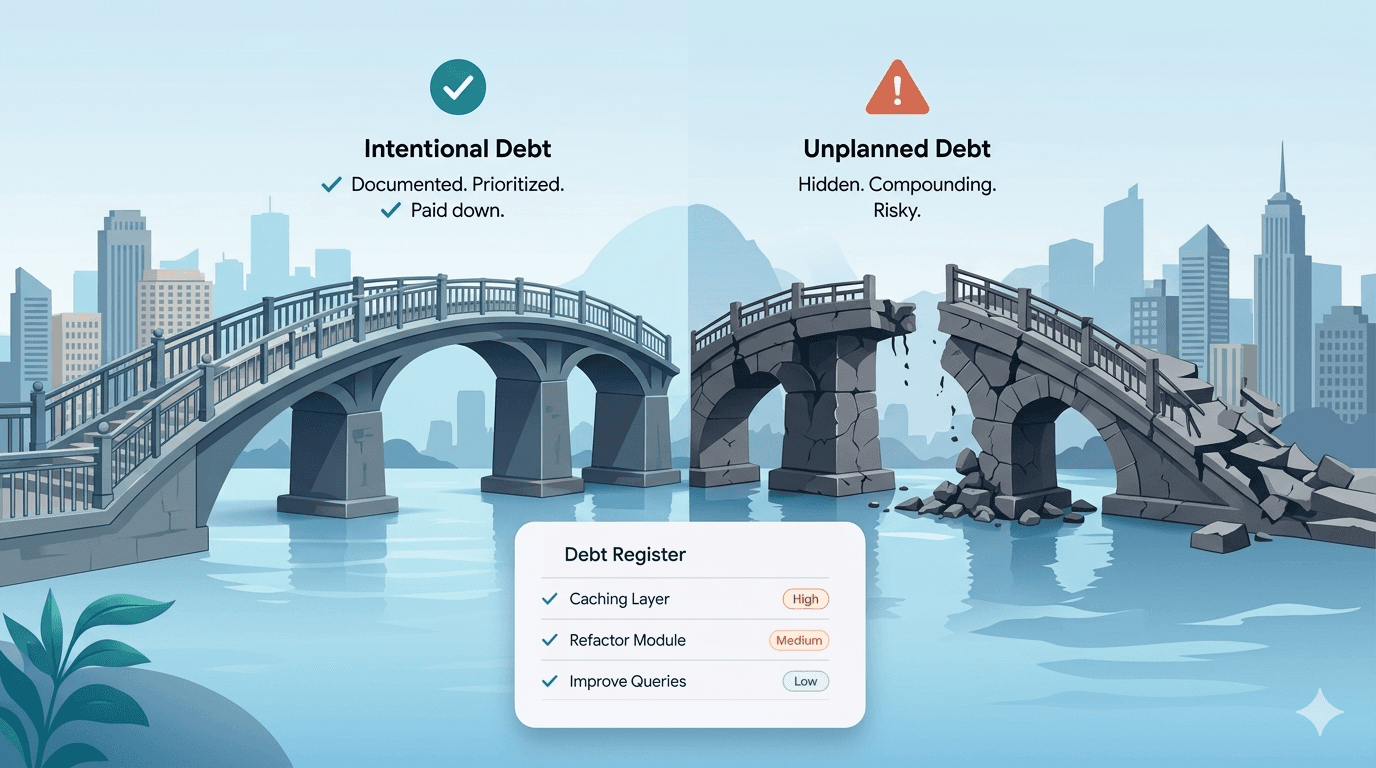
Every shortcut you take in an MVP has a price. The question isn't whether to take shortcuts — it's whether you're doing it consciously.
Technical debt has a bad reputation. But intentional technical debt — trading short-term speed for long-term refactoring — is a legitimate strategy for early-stage companies.
The difference between good and bad debt
Good debt: you skip a caching layer to launch faster, with a documented plan to add it when performance becomes a problem. Bad debt: you design a schema that fundamentally can't support multi-tenancy because no one thought about it.
The rule: document every shortcut you take. If you can't write down why you did it and when you'll fix it, don't do it.
What this means for founders
Ask your engineers to maintain a debt register. Not a guilt list — a prioritised backlog of known shortcuts with their business impact. This turns invisible risk into manageable work.
Every insight on this page comes from building real products with real founders. If something here resonates with a challenge you're facing, it's probably worth a 30-minute conversation.
Ready to build?
Build your MVP in 2–4 weeks.
Turn this insight into action. Book a free 30-minute strategy call and leave with a clear scope, architecture plan, and timeline.